Securing a dependable plumber los angeles property owners can count on resolves high-stress disruptions before water intrusion damages drywall, subflooring, or structural framing. Standard residential diagnostic visits establish practical mechanical solutions directly on site, with initial basic repairs starting at the regional baseline of $250.
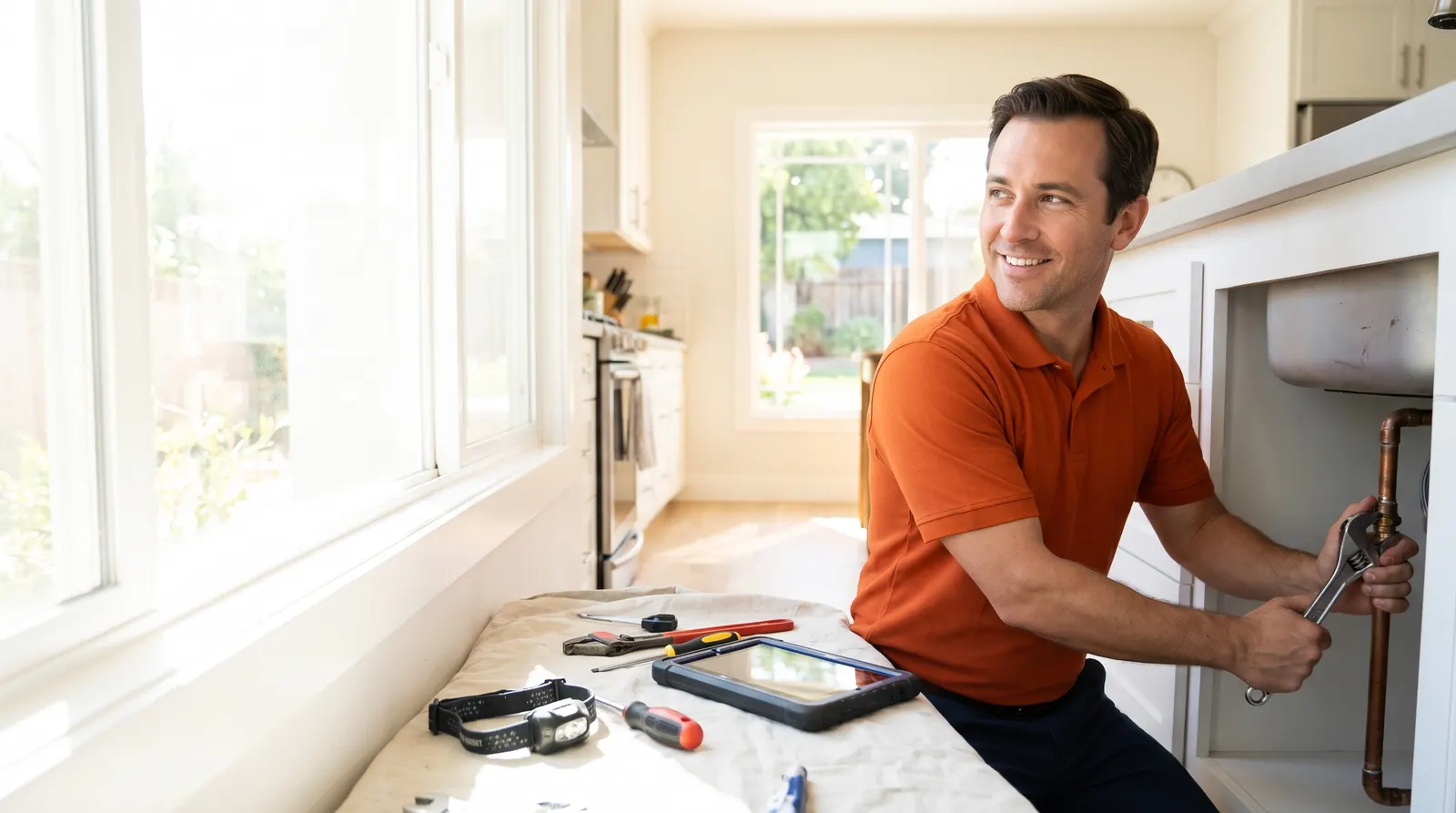
Plumber in los angeles is an essential municipal and residential trade service providing water distribution system repairs, sewer lateral clearing, and fixture installations across Los Angeles County.
Every service reflects the same meticulous attention to detail, whether it's a single job or a larger plumber project across los angeles.
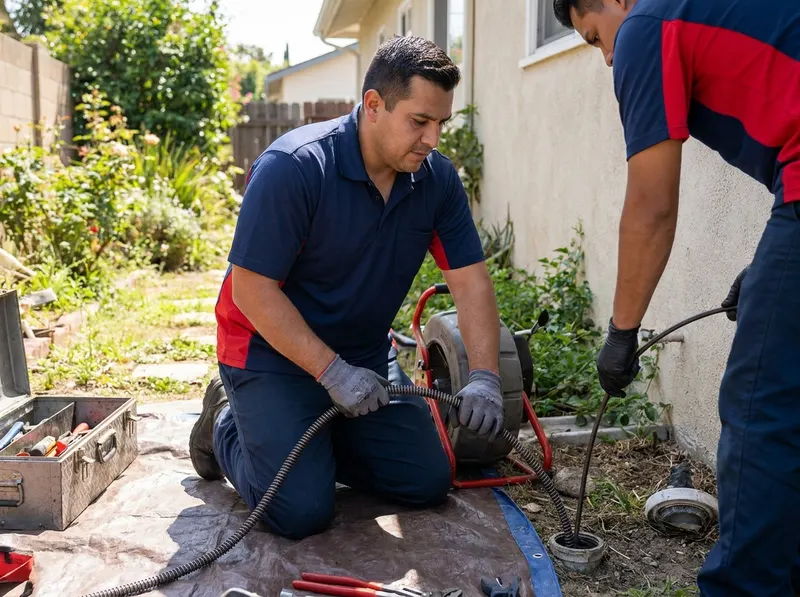
Mechanical clearing removes hair accumulations, saponified grease, and localized debris from interior branch waste lines using electric drain machines. For primary building sewers, self-leveling color push cameras inspect line integrity up to the Los Angeles city main connection, isolating joint displacements and structural shears caused by seismic settling. Heavy root intrusions from mature surface trees are cleared using specialized mechanical cutting heads sized to the exact pipe diameter. Technicians run high-tensile steel cables equipped with inner-core reinforcement to navigate ninety-degree sweeps without kinking, pulling back compacted debris cores to restore free gravitational discharge. Technicians verify water flow downstream by running continuous high-volume water tests to ensure sanitary branches carry solid waste without back-pitch puddling. Cleanout ports are evaluated for cross-threaded threads and sealed with brass or schedule 40 PVC countersunk plugs to eliminate sewer gas escapes into living areas.
Get a quote →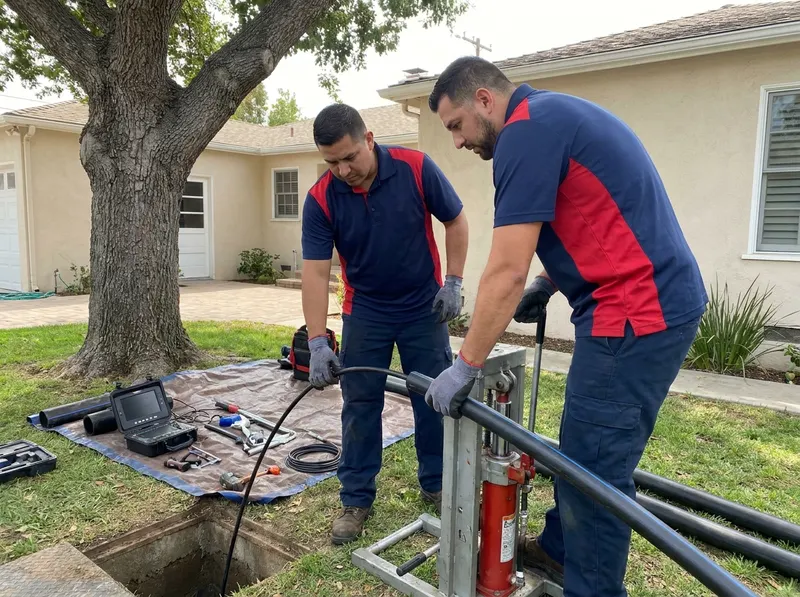
Subsurface sewer failures are resolved using direct open-cut trench excavations or cured-in-place pipe (CIPP) lining. CIPP lining pulls an epoxy-saturated felt tube through an existing cleanout, curing it into a continuous joint-free internal pipe wall without disturbing finished exterior driveways or mature landscaping. Pipe bursting mechanically fractures old clay, cast-iron, or pitch-fiber pipes outward while simultaneously drawing seamless, high-density polyethylene (HDPE) pipe into place. Technicians verify pipeline grade and elevation drop toward the municipal sewer main under the roadway using digital grade-level indicators. Trenchless procedures protect structural retaining walls, mature root zones, and hardscape concrete slabs while creating a seamless flow corridor rated for decades of use. Prior to rehabilitation, hydrostatic pressure tests and digital caliper readings confirm the structural host pipe maintains sufficient circumference to anchor the structural epoxy sleeve.
Get a quote →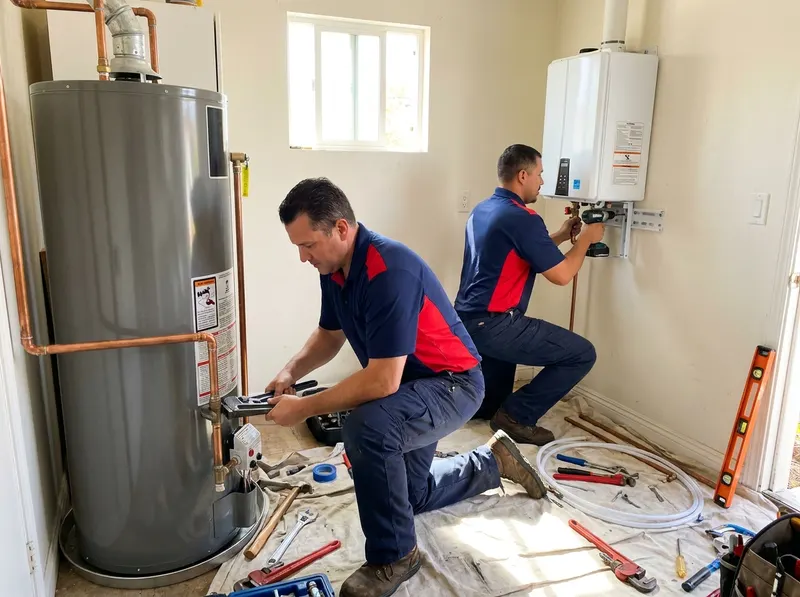
Standard atmospheric natural gas water heaters and high-efficiency tankless water heating units are installed to meet Title 24 energy efficiency compliance. Every installation incorporates thermal expansion tanks, full-port brass isolation valves, code-compliant seismic strapping anchored into structural wall studs, and automatic gas shut-off valves. Sediment purging and heat exchanger descaling services maintain thermal efficiency against regional hard water deposits. Combustion gas venting systems are inspected to confirm positive draft through Type B double-wall metal flues or direct-vent Category IV stainless steel and polypropylene piping. Water lines receive dedicated dielectric unions to prevent galvanic corrosion where copper joins steel tank spuds, stopping localized rust blooms. On high-draw residential installations, technicians calculate total BTU draw against the property meter size to ensure gas supply manifolds deliver stable dynamic operating pressure.
Get a quote →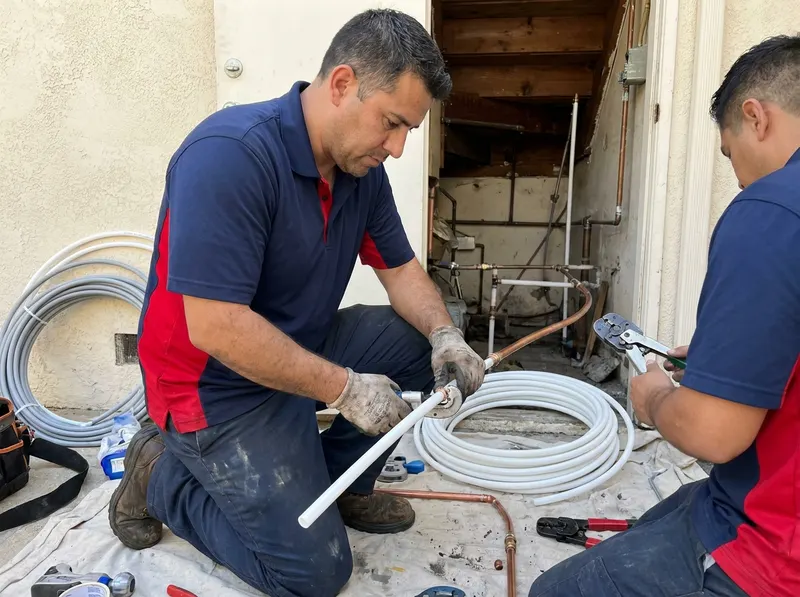
Aged, scale-clogged galvanized steel supply pipes and failing polybutylene lines are replaced with type L copper tubing or cross-linked polyethylene (PEX-a) continuous pipe. Technicians establish dedicated home manifolds that deliver balanced hydrostatic volume across multiple simultaneous fixtures. The replacement process includes strategic drywall penetration mapping, pressure testing up to local code criteria, and code-certified plumbing inspections. Dedicated shut-off valves are positioned on every supply riser to isolate individual bathrooms without de-energizing the main water service. Technicians secure horizontal runs with insulated acoustic suspension clamps to prevent water hammer vibration against timber framing during sudden valve closures. Following pipe placement, lines undergo hydrostatic pressure tests at 100 PSI for a minimum of twenty-four hours to certify joint integrity before closing structural wall cavities.
Get a quote →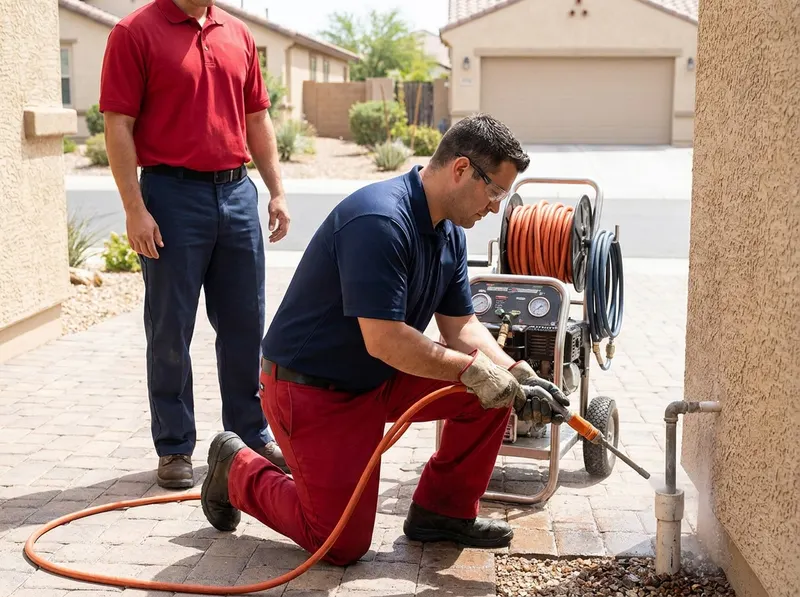
Hydro-jetting units deliver pressurized water streams between 1,500 and 4,000 PSI directly against interior pipe surfaces using specialized forward- and rear-facing propulsion nozzles. This process strips emulsified fats, oil, grease, and heavy mineral scale from commercial kitchen lateral lines and residential sewer mains. Unlike basic snaking that merely punctures blockages, hydro-jetting restores pipe interiors to their original diameter. The high-volume water stream breaks apart calcified uric acid crusts and scours bio-slime layers from interior cast-iron pipe walls without scratching host surfaces. Rotating spinning nozzles strip tree hair roots directly at pipe joints, washing debris out toward the municipal main where it travels downstream safely. Post-jetting inline optical video verification confirms complete circular clearing and reveals the underlying physical condition of underlying clay or cast-iron pipe segments.
Get a quote →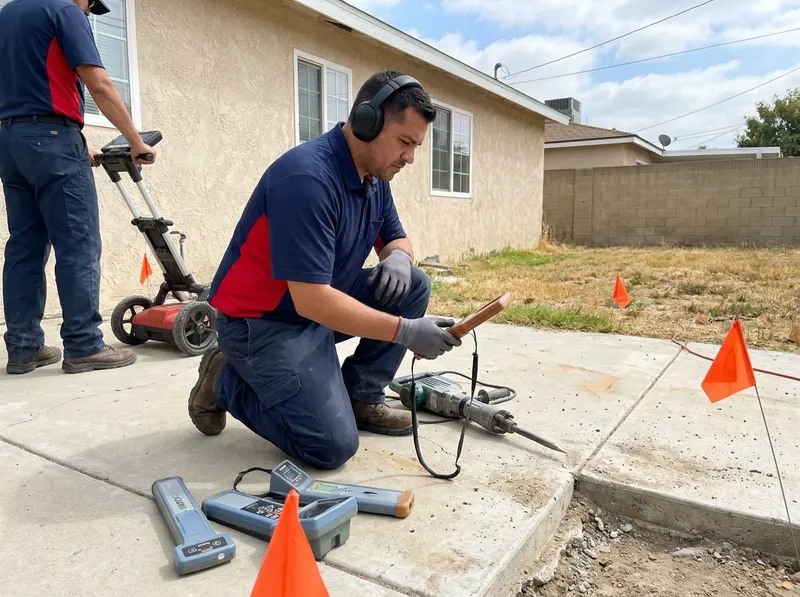
Under-slab pressurized line failures are isolated non-destructively using electro-acoustic listening discs, ultrasonic sound detectors, and thermal imaging cameras. Pinpointed micro-fissures are repaired either through targeted single-tile concrete penetrations or through overhead wall-and-ceiling line reroutes. Overhead rerouting completely eliminates the structural disruption of floor trenching and protects flooring materials. Technicians inject non-toxic tracing gas into pressurized lines to pinpoint micro-leaks through solid concrete footings when ambient surface noise interferes with acoustic detection. Ground-penetrating radar equipment scans for post-tension structural cables within the concrete before any localized concrete cutting begins, safeguarding the structural integrity of the home. Rerouted continuous PEX-a runs are wrapped in protective polyethylene sleeves where they penetrate framing plates, eliminating thermal abrasion wear.
Get a quote →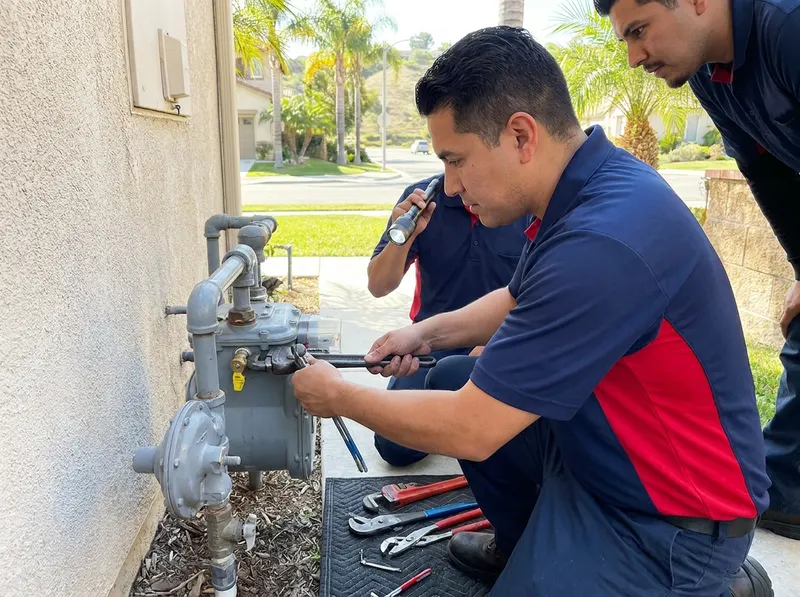
Seismic-actuated natural gas shut-off valves are installed directly onto the exterior gas meter riser upstream of the structure's distribution piping. Calibrated internal metal pendulums react to seismic vibrations of magnitude 5.1 or greater, instantly snapping closed to halt flammable natural gas flow into residential living spaces. Manual reset fixtures enable property owners to restore regular gas flow following fire department line-safety clearance. The valve bodies are cast from heavy-duty anodized aluminum or solid brass to withstand direct atmospheric exposure and seismic shock waves without fracturing. Rigid structural brackets anchor the valve assembly securely to the exterior building foundation to prevent nuisance trips caused by minor wind vibration or lawn equipment contact. Each installation is checked with combustible gas sniffer detectors and soapy water bubble tests to verify absolute gas tightness across all threaded union connections.
Get a quote →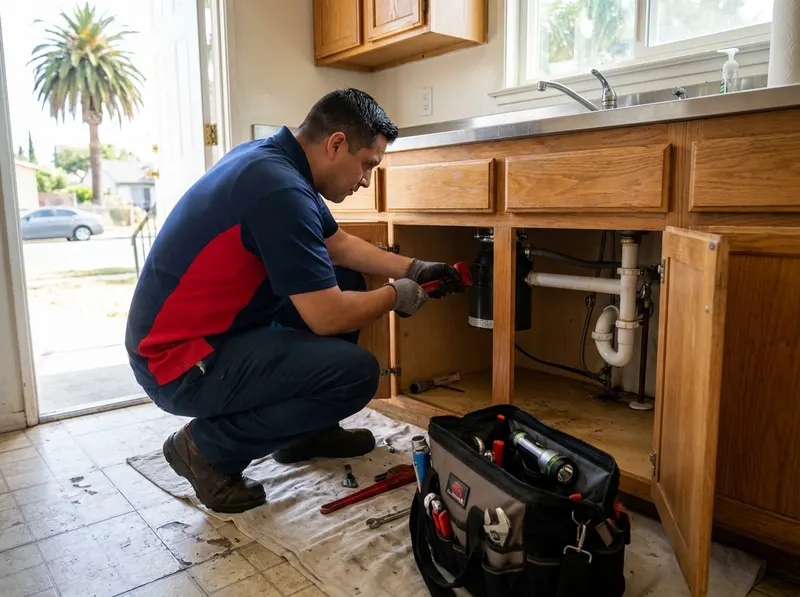
High-torque continuous-feed food waste disposers, stainless steel undermount sinks, and commercial-grade culinary spray faucets are installed and leveled. Drain lines receive dual-slip-joint P-traps, continuous waste tees, and direct air-gap dishwasher backflow preventers to satisfy local municipal health codes. Mechanical blockages are cleared through direct housing disassembly and internal cutter plate unjamming. Technicians check waste line slope beneath sink cabinetry, correcting back-pitched tubular slip joints that allow food residue to settle and generate odors. Water supply lines are upgraded with braided stainless steel flex connectors and quarter-turn ball valves that prevent sudden blowout events. Sound-insulating mounting gaskets are seated between the sink flange and disposal throat to dampen high-frequency operational vibration across stone countertops.
Get a quote →You get a firm, itemized quote for your plumber before any work begins, no surprises, no pressure.
Careful prep, tidy work, and a full cleanup when we are done. We treat your home and belongings like our own.
The same trusted, background-checked team from the first call to the final check.
Selecting plumbing repairs requires evaluating pipe material life spans, local seismic risk, structural foundation types, and municipal drainage gradients. If a residential drain experiences an isolated slow runoff event in a single fixture, mechanical cabling or localized hydro-scrubbing resolves grease and hair buildup without excavating pipe. If tree roots infiltrate exterior clay or cast-iron lines, hydro-jetting clears the diameter temporarily, but non-invasive trenchless epoxy lining or pipe bursting provides permanent structural integrity; the trade-off involves higher upfront material expenses versus eliminating periodic root-sawing visits and avoiding concrete destruction.
For aging domestic water lines, if spot copper pinhole leaks emerge repeatedly in slab foundations, choosing a whole-structure PEX-a repipe bypasses sub-slab access and eliminates hidden water losses; the trade-off involves opening drywall access channels along interior walls versus the disruptive jackhammering of interior structural slabs. For water heating, atmospheric gas storage tanks offer low purchase friction and baseline installation costs, whereas exterior tankless water heaters deliver continuous hot water without standby energy loss; the trade-off is requiring upgraded three-quarter-inch gas supply lines, dedicated venting, and localized annual descaling cycles to manage Southern California mineral accumulation. In older raised-foundation homes with failing galvanized water lines, replacing exposed basement and crawlspace runs with copper Type L tubing provides rigid, long-term durability, whereas flexible cross-linked polyethylene (PEX-a) pulls through tight wall cavities with fewer structural penetrations; the trade-off is higher raw material cost for copper versus requiring specialized expansion fittings and physical protection against UV exposure for PEX.
When addressing main sewer line belly dips caused by seismic soil settlement, an open-cut trench excavation physically re-establishes positive gravitational fall toward the municipal trunk, whereas cured-in-place pipe (CIPP) lining smooths internal transitions but mirrors the existing slope profile; the trade-off is temporary surface disruption of paved driveways or lawns versus the risk of recurring sediment pooling in uncorrected bellies. For fixture upgrades, pressure-assisted high-efficiency toilets prevent chronic waste line sluggishness in flat drainage runs, while standard gravity toilets operate quietly and use simple mechanical replacement components; the trade-off is higher initial fixture hardware expense and louder flushing sound versus increased risk of double flushing and minor waste accumulation in horizontal piping networks. Choosing between point-of-use electric water heaters and central gas systems comes down to fixture layout: point-of-use units eliminate wait times for isolated guest bathrooms or ADU additions, whereas central systems simplify annual maintenance to a single location; the trade-off is managing multiple dedicated 240-volt electrical circuits versus running extended domestic hot water recirculation lines across the footprint of the home.
Every project gets a firm, written price after a free on-site visit. Ranges below for orientation.
Tell us about your plumber job and we'll send a clear, written quote, usually the same day. Or just call and talk to a real los angeles pro.
(626) 562-9235
Los Angeles features distinct plumbing challenges driven by historic architectural shifts, diverse regional topography, and expansive urban soil movement. Across hillside sections of Los Feliz, Silver Lake, and Echo Park, expansive clay soil shifts during seasonal winter rain shifts, putting intense physical shear pressure on vintage vitrified clay sewer lines laid during the early twentieth century. In valley floor locations like Sherman Oaks and flat coastal regions like Venice and Santa Monica, high water tables and aggressive root systems from surface ficus, jacaranda, and eucalyptus trees routinely breach aged cast-iron piping joints seeking moisture. Water supplied across Los Angeles County by the Los Angeles Department of Water and Power (LADWP) and the Metropolitan Water District carries an average total dissolved solids (TDS) level between 200 and 400 parts per million, causing accelerated calcium carbonate scale along copper interior walls, shower valve cartridges, and tankless heat exchanger coils. Historic neighborhoods like Highland Park and Koreatown possess a significant inventory of residential craftsman bungalows and mid-century multi-family apartment buildings with original unlined cast-iron waste stacks and galvanized zinc-coated steel supply runs that have reached the end of their operational lifespans. Additionally, municipal water delivery through trunk lines running from the Van Norman Complex and regional hillside reservoirs produces variable static pressures ranging from 45 PSI on flat parcels to well over 110 PSI at lower elevations along canyon bases near Brentwood and Westwood. This extreme hydraulic force requires reliable pressure reducing valves to prevent burst appliance supply hoses and premature water heater failures. In the seismic fault zones crossing the Los Angeles basin, ground movement accelerates joint separation in brittle drain lines and necessitates compliant seismic shut-off valves on gas risers to protect residential neighborhoods from structural fire hazards following seismic disturbances.
Free estimates for los angeles & the surrounding area.
 UrbanFix Handyman